
Choosing the right gym lockers is about more than appearance or initial cost. The material needs to suit the changing room, the level of daily use and the amount of moisture present.
Metal lockers are a practical choice for many dry gym environments, while plastic lockers are often better suited to swimming pools, showers and humid leisure facilities. This guide compares metal lockers vs plastic lockers to help gym owners, facilities managers and leisure centre operators choose confidently.
Key Takeaways
- Metal gym lockers are generally suited to dry changing rooms and fitness facilities.
- Plastic lockers are usually the better option for wet areas and humid environments.
- Locker durability depends on location, construction, installation and maintenance.
- Security is influenced by the complete locker design and locking system, not just its material.
- Leisure centres with wet and dry zones may benefit from using both materials.
Metal Lockers vs Plastic Lockers at a Glance
| Feature | Metal Gym Lockers | Plastic Gym Lockers |
| Best environment | Dry indoor changing rooms | Wet or humid environments |
| Moisture resistance | Protected by the surface finish | Naturally rust and corrosion resistant |
| Initial cost | Often more cost-effective | Commonly a higher initial investment |
| Maintenance | Coating damage should be monitored | Generally low surface maintenance |
| Typical application | Gyms, studios and staff areas | Pools, spas and shower areas |
| Available layouts | Wide range of tiers and compartments | Several compartment configurations |
| Impact performance | Strong but may dent | Often impact resistant, depending on construction |
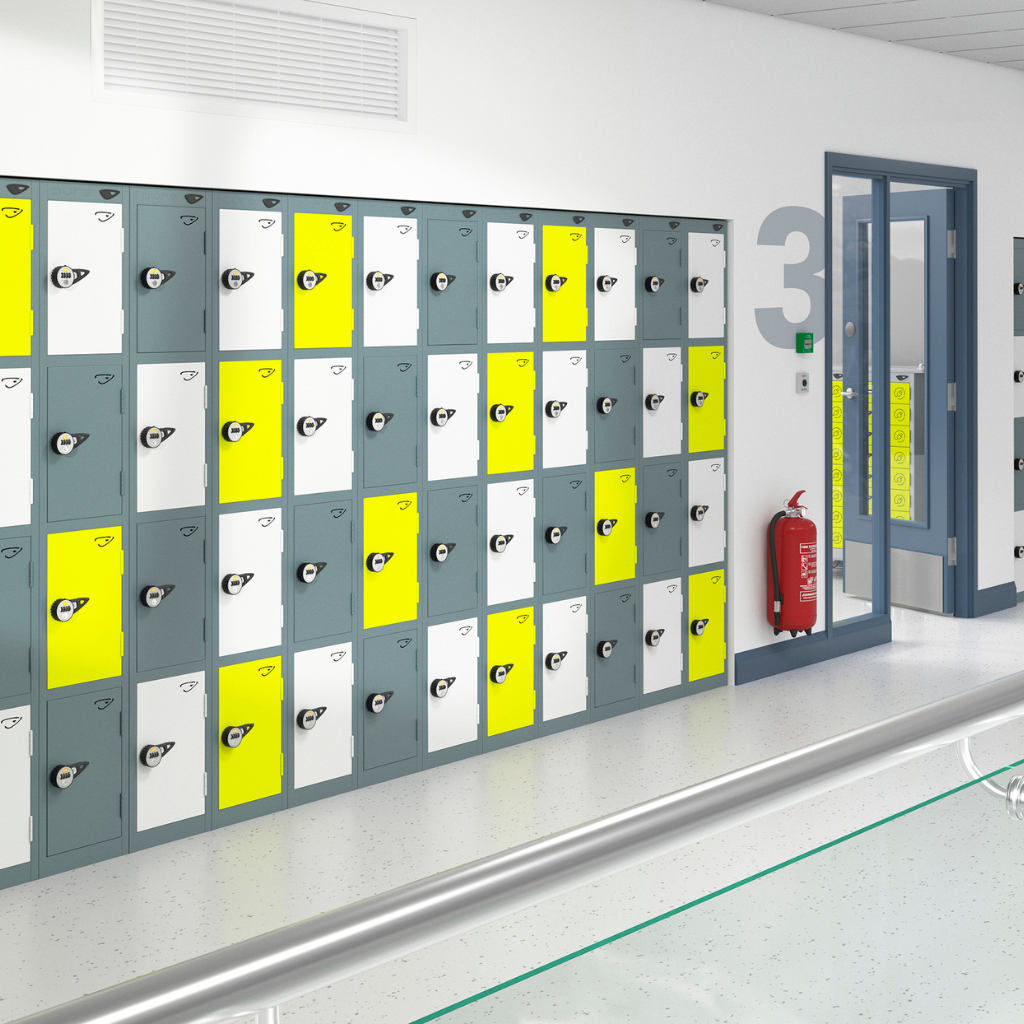
Why Choose Metal Gym Lockers?
Metal lockers are widely used in gyms because they offer practical, secure changing room storage in a broad range of sizes.
Single-tier designs provide room for coats, bags and clothing. Multi-tier lockers create more individual compartments within the same amount of floor space, which can be useful in busy gyms with a large membership.
Nationwide Lockers supplies metal lockers in several configurations, including ventilated and multi-compartment options for clothing, equipment and personal belongings.
Advantages of Metal Lockers
Metal gym lockers can provide:
- Strong storage for regular daily use
- Space-efficient multi-tier arrangements
- Ventilation options for clothing and equipment
- A choice of colours, sizes and configurations
- Compatibility with key, combination, digital and RFID locks
- A practical solution for larger locker installations
They are particularly effective in dry gym changing rooms where there is adequate ventilation and limited direct exposure to water.
Potential Limitations of Metal Lockers
Steel can corrode if it is repeatedly exposed to moisture, particularly when its protective coating has been scratched or damaged.
Metal lockers may therefore require more careful placement in facilities with showers, swimming pools or consistently high humidity. Standing water around locker bases should be avoided, and damaged finishes should be inspected before corrosion spreads.
The National Physical Laboratory’s corrosion guidance highlights the importance of considering environmental conditions when selecting and assessing materials.
Why Choose Plastic Gym Lockers?
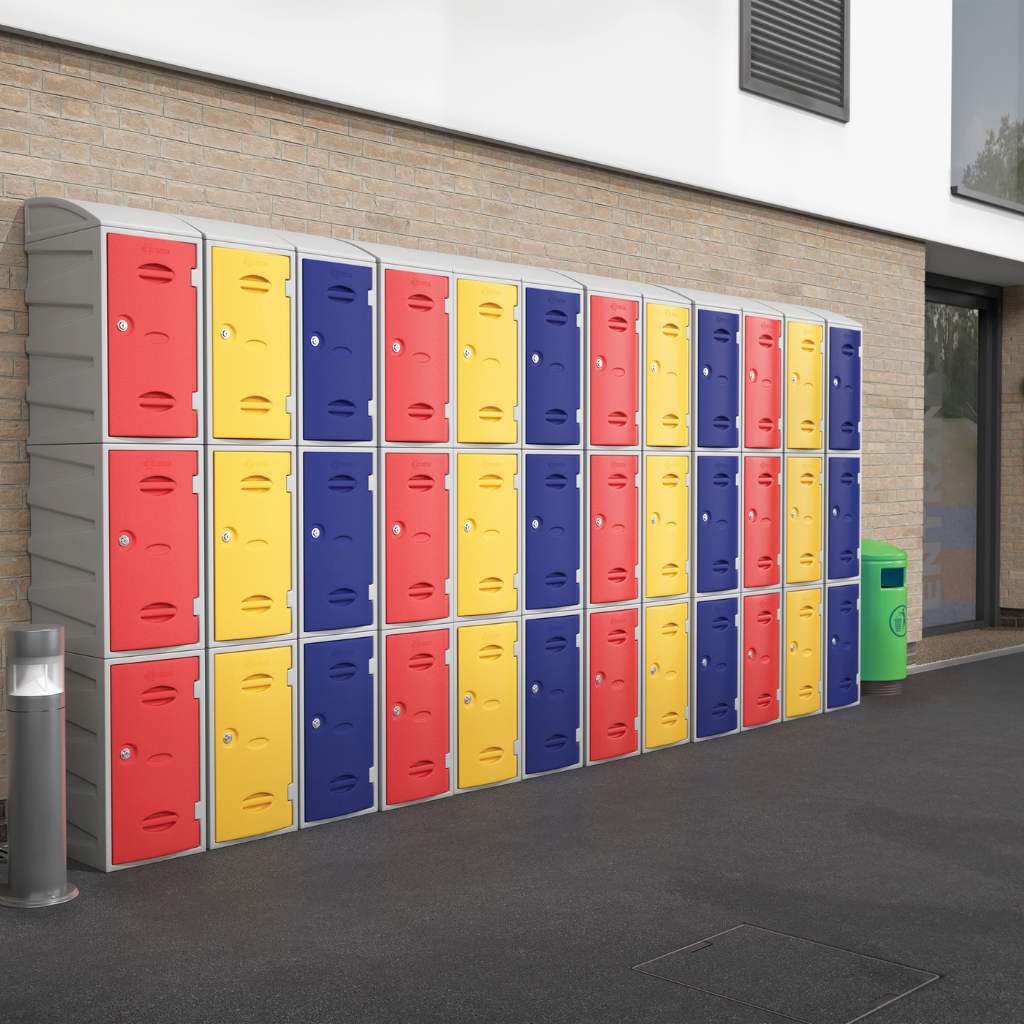
Plastic storage lockers are designed for locations where moisture resistance is a major priority. They are commonly used as wet area lockers in swimming pools, spas, leisure centres and changing rooms close to showers.
Unlike steel, plastic does not develop conventional rust. This makes it suitable for humid environments where damp clothing, wet towels and frequent cleaning are part of everyday use.
Nationwide Lockers’ plastic lockers are positioned for gyms, leisure centres, swimming pools and other demanding environments where water and humidity are common.
Advantages of Plastic Lockers
Plastic lockers can offer:
- Strong resistance to moisture and corrosion
- Smooth surfaces that are straightforward to clean
- Suitability for poolside and wet changing rooms
- Good impact resistance, depending on the model
- Lower surface maintenance in damp environments
- A range of colours, compartments and locking systems
Potential Limitations of Plastic Lockers
Plastic lockers often have a higher initial cost than standard metal alternatives. The available dimensions, configurations and accessories may also differ between ranges.
The word waterproof should be used carefully. Although the plastic body may resist water, a complete locker also contains doors, joints, hinges, ventilation openings and locks. The exact product specification should always be checked before installing lockers where they will receive direct or heavy water exposure.
Which Type of Locker Is More Durable?
There is no single answer because locker durability depends on the environment.
Metal lockers can provide reliable heavy duty storage in dry spaces. However, they may dent during forceful use, and exposed steel may become vulnerable to corrosion if the finish is damaged.
Plastic lockers are corrosion resistant and well suited to swimming pool environments. Their resistance to impacts, scratches, heat and cleaning chemicals will depend on the material and construction of the particular locker.
The expected locker lifespan will also be affected by:
- Daily user numbers
- Member behaviour
- Moisture exposure
- Installation quality
- Cleaning products
- Ventilation
- Maintenance and replacement parts
A locker made from the correct material for its location will usually be easier to maintain than one placed in an unsuitable environment.
Hygiene, Cleaning and Maintenance
Locker hygiene relies on regular cleaning, good ventilation and sensible moisture management. The material alone will not keep a changing room hygienic.
Metal locker surfaces should be wiped with compatible products and checked for chipped coatings, scratches and moisture around the base. Plastic lockers are generally easy to clean, but handles, locks, corners and hinges still require attention.
Cleaning teams should follow the locker manufacturer’s care instructions and the product information for any chemicals they use. The Health and Safety Executive’s COSHH guidance explains how employers should assess and control risks from hazardous cleaning substances.
Antimicrobial lockers should only be described as such when the product has a verified antimicrobial material, additive or coating. These features do not replace an appropriate cleaning schedule.
Does Locker Material Affect Security?
Locker material is only one part of security. Door construction, hinges, lock housings and the access system all influence how belongings are protected.
Key locks provide familiar, simple access but require key management. Mechanical combination locks can reduce problems with lost keys, while digital and RFID systems may suit facilities that want more flexible access control.
Nationwide Lockers offers a range of locker locking systems, including key, combination, digital, RFID and smart options.
The most suitable lock will depend on member turnover, staff resources, how lockers are allocated and whether they are used permanently or temporarily.
Which Lockers Suit Different Gym Environments?
Dry Gym Changing Rooms
Metal gym lockers are usually a practical choice for standard gyms, health clubs and fitness studios where locker areas are kept away from showers and standing water.
They offer flexible changing room storage and can be configured to accommodate sports bags, clothing, footwear and smaller personal items.
Wet Changing Rooms and Swimming Pools
Plastic lockers are generally better suited to pool areas, spas and shower facilities. Their corrosion resistance reduces the maintenance concerns associated with exposed steel in wet conditions.
Locker ventilation remains important, particularly where members store wet swimwear or towels.
Mixed Leisure Centres
A combined facility does not need to use the same locker material throughout.
Metal lockers can be installed in dry fitness changing rooms, while plastic lockers are used closer to showers, swimming pools or spa areas. A mixed approach can balance budget, moisture resistance and maintenance requirements without compromising member storage.
What Should You Check Before Ordering?
Before choosing gym lockers for a fitness or leisure facility, consider:
- Whether the area is dry, occasionally damp or consistently humid
- How close the lockers will be to showers or pools
- The number of daily users
- Required compartment sizes
- Whether wet clothing will be stored
- Ventilation requirements
- Cleaning routines and chemical compatibility
- The preferred locking system
- Accessible changing room provision
- Bases, stands, sloping tops and surrounding benches
Accessibility should be considered during the wider changing room design. Sport England’s guidance on accessible and inclusive facilities focuses on reducing barriers and creating facilities that support a wider range of users.
Metal or Plastic Lockers: Which Should Your Gym Choose?
Choose metal lockers for dry, general-purpose gym changing rooms where flexible configurations, strength and value are priorities.
Choose plastic lockers for wet areas, swimming pools and humid environments where moisture and corrosion resistance are more important.
For larger leisure centres, combining the two materials may provide the most practical gym locker solution. The decision should be based on the conditions in each area rather than applying one specification across the entire building.
Nationwide Lockers can help assess your available space, user numbers, environment and security requirements. To discuss the most appropriate layout for your facility, request a locker site visit.
Frequently Asked Questions
Are metal or plastic lockers better for gyms?
Metal lockers are generally better for dry gym changing rooms, while plastic lockers are more suitable for wet, humid or poolside areas. The right choice depends on the environment, budget, usage and maintenance requirements.
Do metal gym lockers rust?
Metal gym lockers can rust if steel is repeatedly exposed to moisture, particularly where the protective finish is damaged. Suitable placement, ventilation, cleaning and regular inspection can reduce the risk.
Are plastic lockers waterproof?
Plastic lockers are moisture and corrosion resistant, but the complete product specification should be checked. Doors, vents, hinges, joints and locks can affect how the locker performs during direct water exposure.
Which locker material is easier to maintain in a busy gym?
Plastic lockers usually require less surface maintenance in wet environments because they do not rust. In a dry changing room, properly maintained metal lockers can also be straightforward to clean and manage.
Can gyms use metal and plastic lockers in the same changing room?
Yes. A gym or leisure centre can use metal lockers in dry sections and plastic lockers near showers, pools or other high-moisture areas. This can provide a more suitable solution for each part of the facility.